The Employee You Hired is not The Inclusion you created

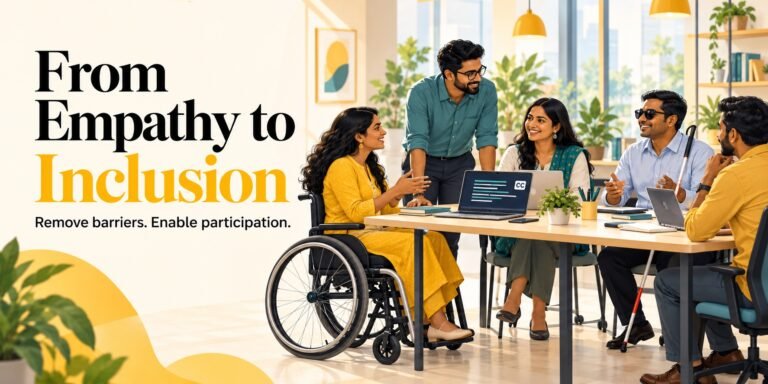
Hiring opens the door.
Inclusion creates belonging.
Hiring a person with a disability is an important step toward building a more diverse workplace.
An organisation can celebrate the number of people with disabilities it has hired and still have a workplace that isn't truly inclusive.
What happens after the offer letter is accepted?
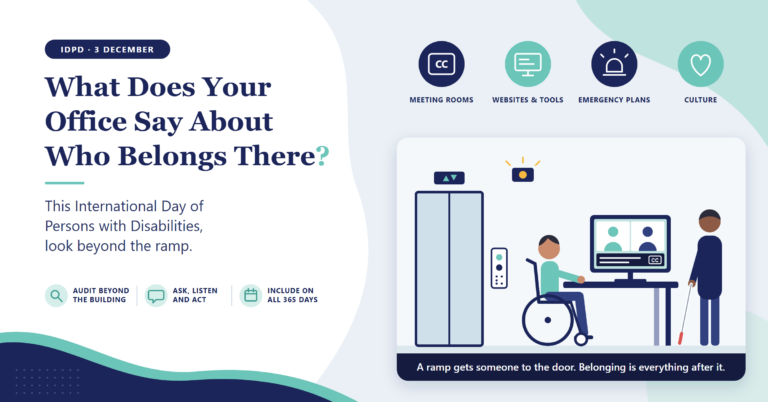
Can the employee enter the office independently?
Can they access the organisation's digital tools and internal systems?
Can they participate comfortably in meetings and team activities?
Does their manager understand reasonable accommodations?
Do they have the same access to learning, promotions and leadership opportunities?
And most importantly — do they feel like they belong?
Because inclusion isn't simply about who gets hired.
It's about what happens once they are hired.
When hiring happens, but barriers remain
Imagine hiring a wheelchair user but having inaccessible meeting rooms.
Hiring a Deaf employee but conducting important meetings without captions or interpretation.
Hiring a blind employee but providing documents that cannot be accessed through a screen reader.
But the system hasn't changed.
That is representation without inclusion.
Look beyond recruitment
True disability inclusion requires organisations to look beyond recruitment and examine the entire employee experience — from onboarding and accessibility to communication, career growth and leadership.
It means creating an environment where employees don't have to constantly ask:
“Can I access this?”
“Can I participate?”
“Will I be considered for this opportunity?”
Instead, accessibility and inclusion should already be built into the way the organisation works.
Because a workplace shouldn't simply make space for people with disabilities.
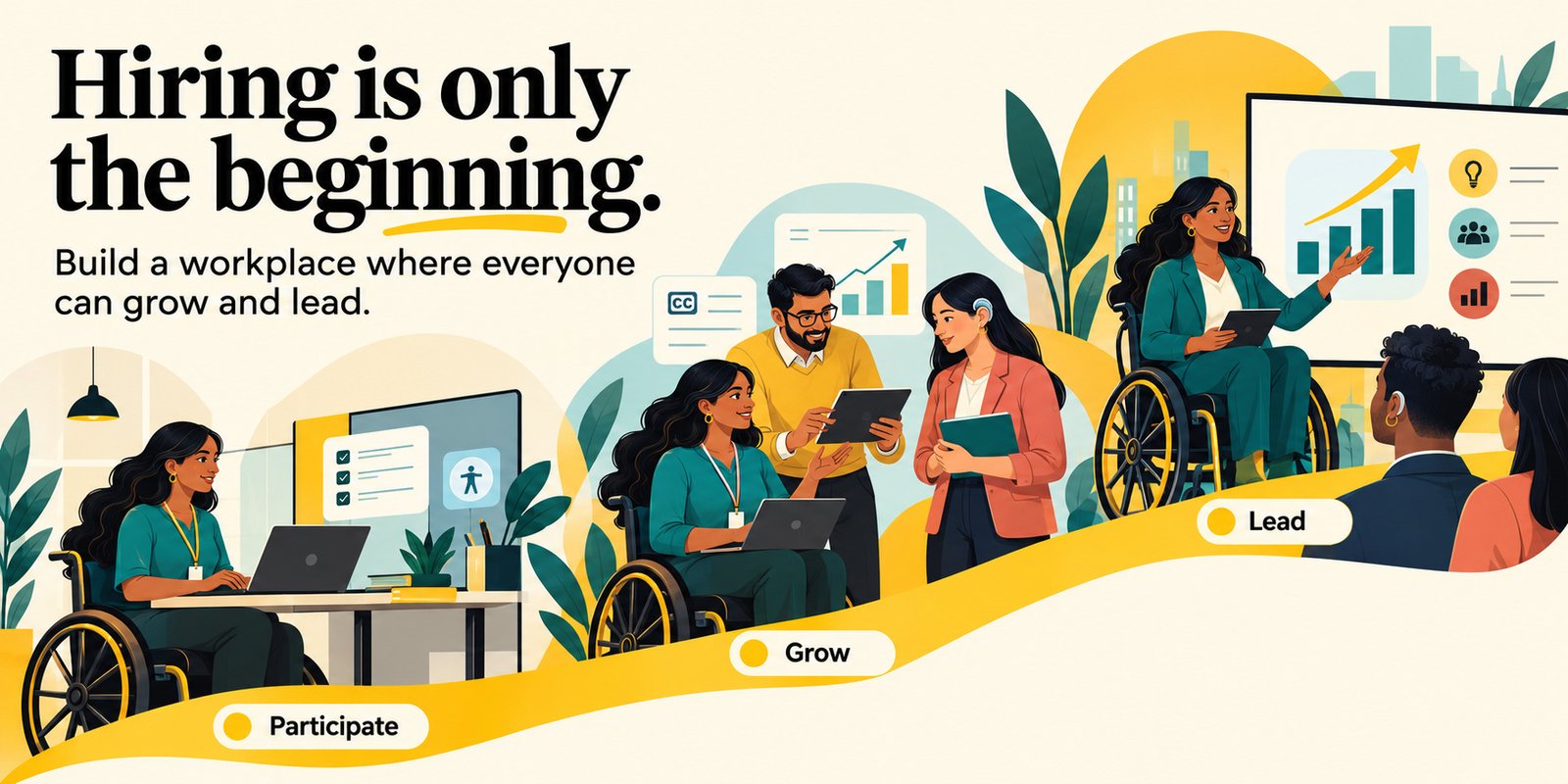
It should be designed so that people with different abilities can participate, contribute, grow and lead.
Hiring
Brings people through the door.
Accessibility
Helps them participate.
Inclusion
Gives them the opportunity to thrive.