Empathy Has a Limit. Inclusion Does not

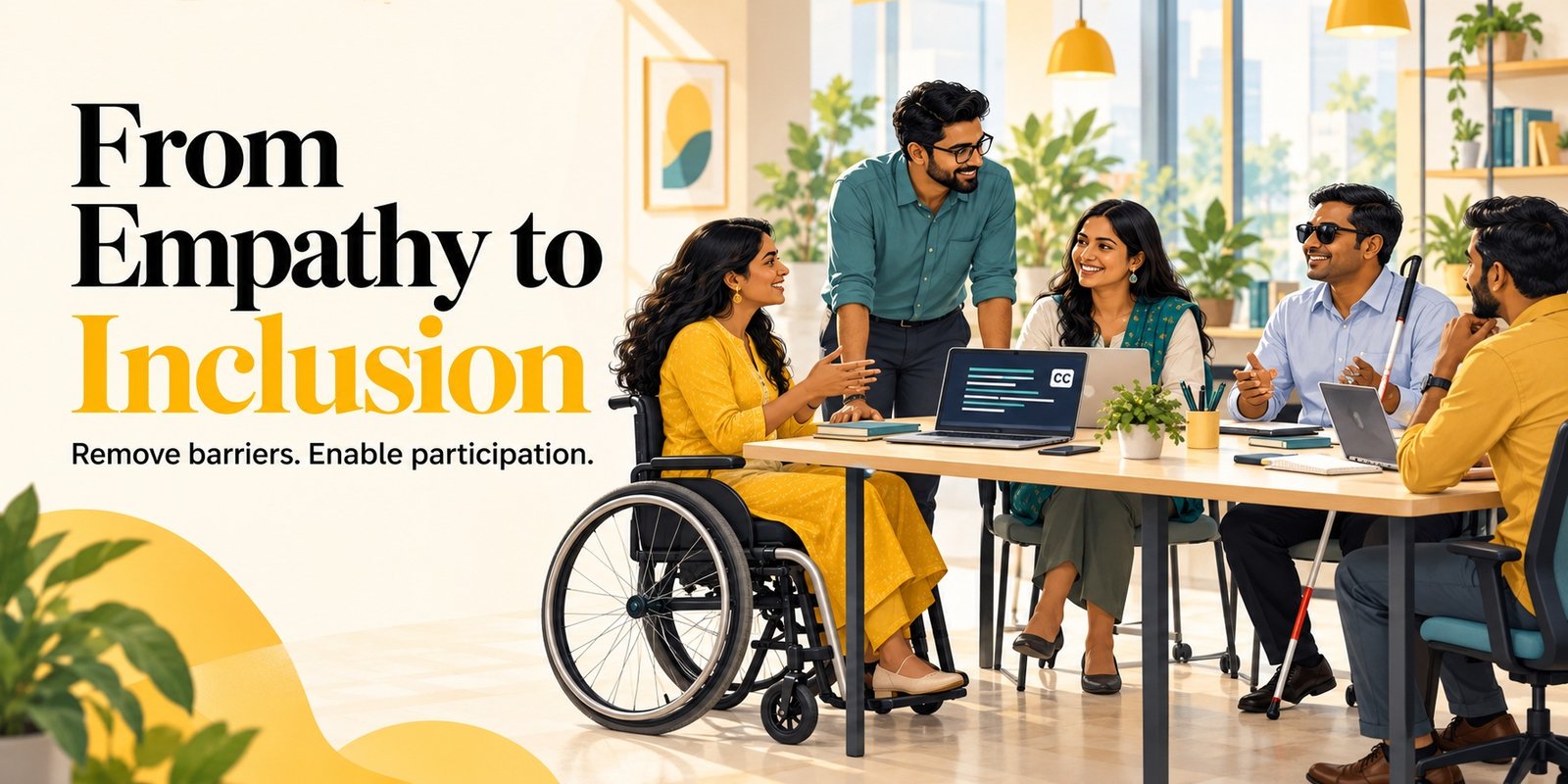
From Empathy
to Inclusion
We often hear: “Imagine being disabled.”
Close your eyes and imagine being blind. Sit in a wheelchair and imagine not being able to walk. Cover your ears and imagine not being able to hear.
These activities can create empathy. They can make us pause and notice barriers.
But they have a limit.
Because the simulation ends.
The barrier doesn’t.
A five-minute experience cannot represent a lifetime of navigating inaccessible buildings, websites, workplaces, transport systems or communication.
More importantly, disability is not simply about what a person cannot do. Often, it is about what the environment prevents them from doing.
Physical spaces
A wheelchair user isn't excluded by their wheelchair — they may be excluded by a staircase.
Communication
A Deaf employee isn't excluded by being Deaf — they may be excluded when meetings have no captions or sign language support.
Digital access
A blind employee isn't excluded by blindness — they may be excluded by an inaccessible digital platform.
This is where we need to move
from empathy to inclusion.
Instead of asking:
“How would I feel if I were disabled?”
Let's ask:
“What can I change so that a person with a disability can participate equally?”
That means
- Accessible spaces.
- Accessible technology.
- Inclusive hiring.
- Reasonable accommodations.
- Better communication.
And, most importantly, listening to people with disabilities and involving them in decisions that affect them.
Because inclusion isn't about temporarily experiencing someone else's barriers.
It's about removing those barriers altogether.